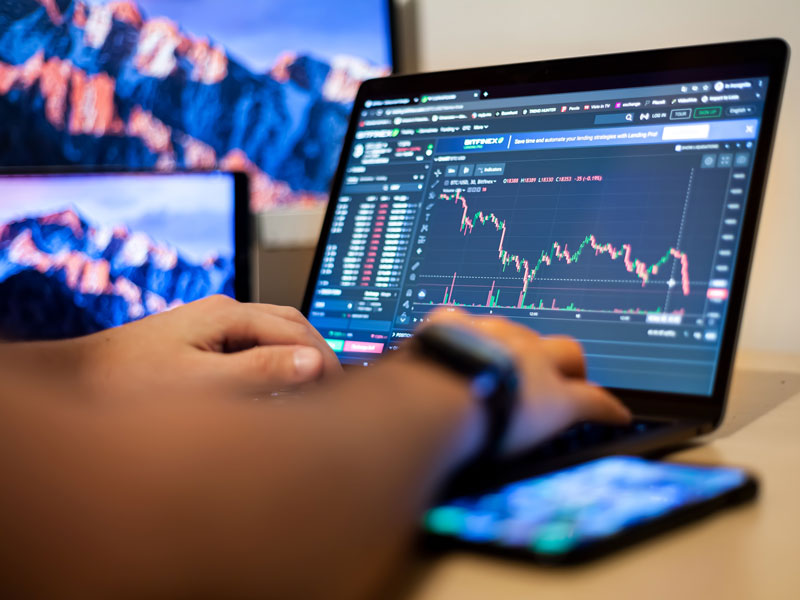
The foreign exchange (forex) market is a global decentralized market for the trading of currencies. This market determines the foreign exchange rate, which is the price of one currency in terms of another. The forex market is the largest, most liquid market in the world, with a daily trading volume of over $6 trillion.
There are three main types of forex market participants:
- Central banks and other monetary authorities
- Commercial banks and other financial institutions
- Retail forex brokers and individual traders
Currencies are traded on the forex market through a broker or dealer, and are bought and sold in pairs. For example, the euro and the U.S. dollar (EUR/USD) or the British pound and the Japanese yen (GBP/JPY). The currency on the left is called the base currency, and the currency on the right is called the quote currency. The base currency is the one being bought or sold, while the quote currency is the one being used to price the base currency.
Traders on the forex market can profit by buying and selling currencies using leverage. Leverage allows traders to increase their exposure to a financial market without having to commit the full amount of capital required for the trade. This is achieved by borrowing a portion of the required capital from a broker. However, leverage can also increase potential losses, so it is important for traders to understand the risks and use appropriate risk management strategies.
The forex market is open 24 hours a day, five days a week, with the exception of weekends. This is because currencies are traded around the world in all major financial centers. As a result, the forex market is always active, with prices constantly changing.
I hope this information was helpful! Let me know if you have any other questions.


0 Comments